
AI-enhanced Quick Search and literature summarization
Last updated on February 25, 2026
Release Notes for February 2026
Reaxys now offers AI-enhanced document search and literature summarization, combined with a refreshed user interface. These enhancements help chemists find, understand, and verify relevant literature more efficiently, while supporting the scientific rigor and trust that defines Reaxys.
Quick Search: AI-Enhanced, Familiar Workflows
Quick Search now supports both keyword-based and natural language queries. You can ask chemistry related questions in plain language and retrieve the most relevant literature, as ranked by the system, without changing the way you already work. Existing structure searches, property searches, and Query Builder workflows remain available, allowing you to adopt AI features at your own pace.
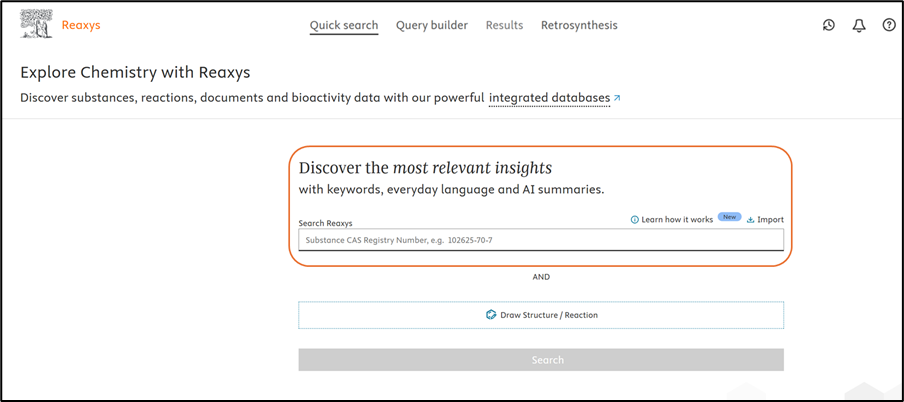
To support confidence and responsible use, the “Learn How It Works” section has been updated with clear guidance on how AI summarization works, when summaries are available, and how to review and interpret AI-generated content.
How Natural Language Queries Work
When a document search is initiated from Quick Search, Reaxys combines natural language query (NLQ) interpretation with keyword search logic to deliver a unified results set. The Results preview page clearly indicates that the NLQ based result set (A) will also include an AI-generated summary (B). All the other results are retrieved as usual based on a keyword search only (C).
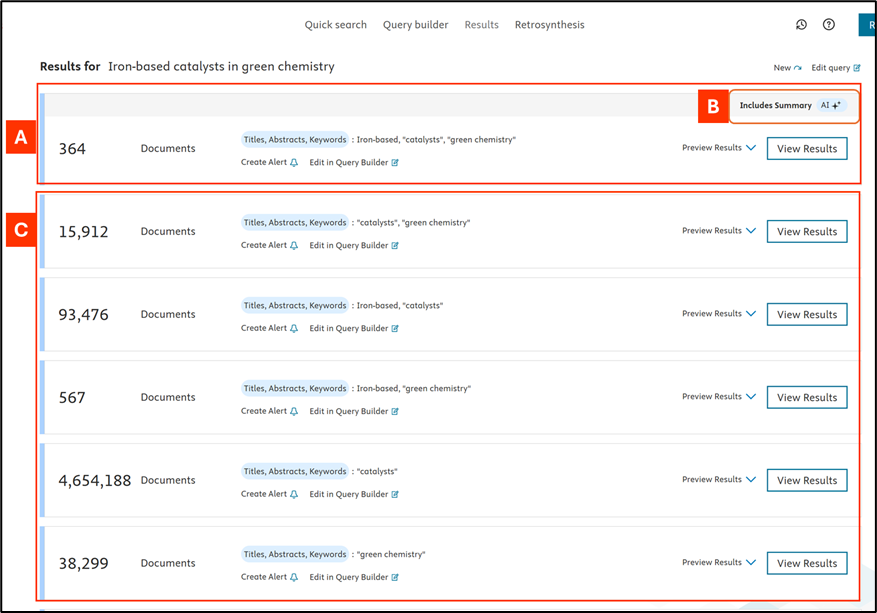
You can review how your keyword-based query has been interpreted by selecting Edit in Query Builder.
AI-Generated Literature Summaries
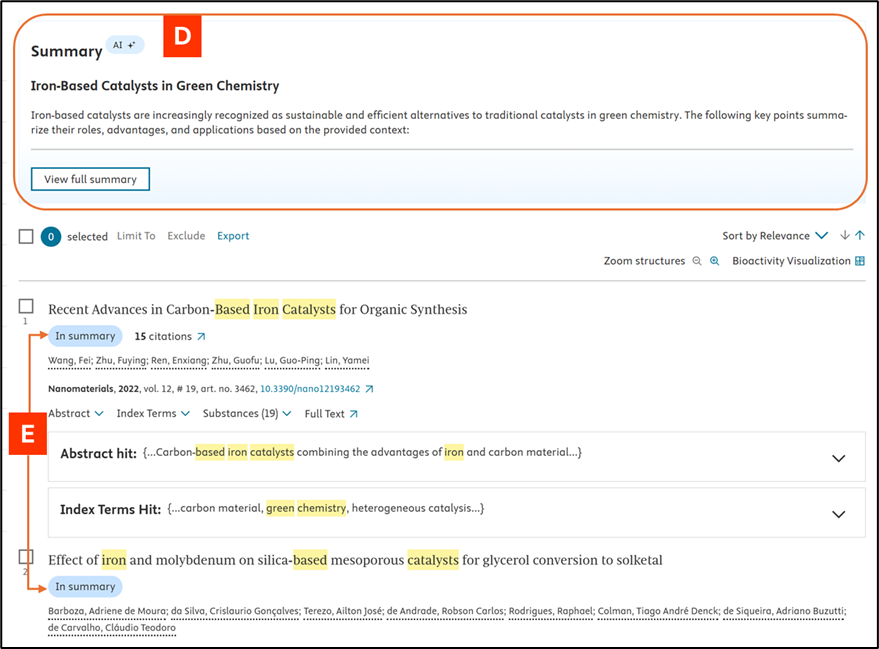
For eligible document searches, initiated from Quick Search, Reaxys now provides an AI-generated summary at the top of the results page (D), giving you a quick overview of the topic before you explore individual papers. Summaries are generated using title and abstract from up to 20 of the most relevant Reaxys documents. The contributing references are clearly identified in the results list (E).
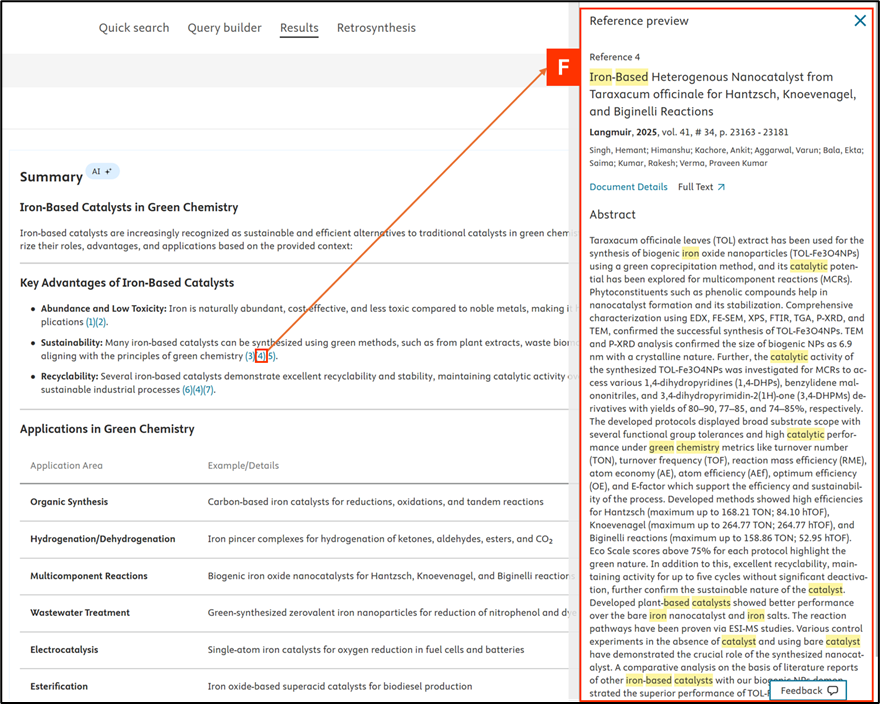
Clicking on a numbered reference will reveal full citation details—author names, publication year, and title—making it easy to verify insights and explore sources further. You can also click directly through to the full text for deeper review of documents referenced in the generated summary (F).
Queries eligible for Summarization
AI-generated summaries are available for document searches using natural language from Quick Search. Applying filters will temporarily close the summary. The summary can be restored by returning to the original, unfiltered query.
Summaries are currently not generated for:
- Structured data searches (e.g., reaction conditions)
- Searches based on specific identifiers (e.g., CAS numbers or DOIs)
- Structure-based or mixed text-and-structure queries
- Searches started from Query Builder
Modernized Results Page for Efficient Review
The refreshed results page features a cleaner layout with updated colours, icons, and improved visual hierarchy.
Transparent and Secure AI, grounded in trusted, authoritative chemistry data.
All AI capabilities in Reaxys are built in line with Elsevier’s Responsible AI Principles, with data privacy and security at their core. User prompts are not used to train large language models, and zero-retention agreements ensure they are not stored or reused. Responses are generated from trusted, curated chemistry content within Elsevier’s secure cloud environment. Summaries are generated exclusively from curated Reaxys chemistry content, including titles, abstracts, and keywords from literature and patents, which are updated weekly.
Did we answer your question?
Related answers
Recently viewed answers
Functionality disabled due to your cookie preferences