
View by category
Identify and evaluate existing and potential collaboration partners
Last updated on October 16, 2025
Also available in
Access a list of Institutions that you collaborate with or have the potential to collaborate with. Start with a worldwide view of your institution’s collaboration landscape and then zoom in to individual collaborating Institutions and Researchers globally. You can also use the subject area filters, including self-defined Research Areas to focus on current and potential collaborators aligned with your key areas of focus.
- On the Collaboration page, the Current collaborators option helps you explore existing collaborative links, based on co-authorship, allowing you to rank Institutions based on co-authored publications and impact related metrics
The Potential collaborators page identifies Institutions that you haven’t yet co-authored any publications with - Select your desired year range from:
- 3 years*
- 5 years*
- 10 years
- *+current year and beyond
- Filter by subject using any of the 6 subject classifications available
- Filter by self-defined Research Areas to identify current and potential collaborators aligned with keyareas of focus (available for your home institution)
- Select the Map to explore and visualize an Institution's collaboration landscape
- Click on regions and zoom in to investigate and visualize collaboration profiles at the country and state level, and see the collaborative links at each Institution
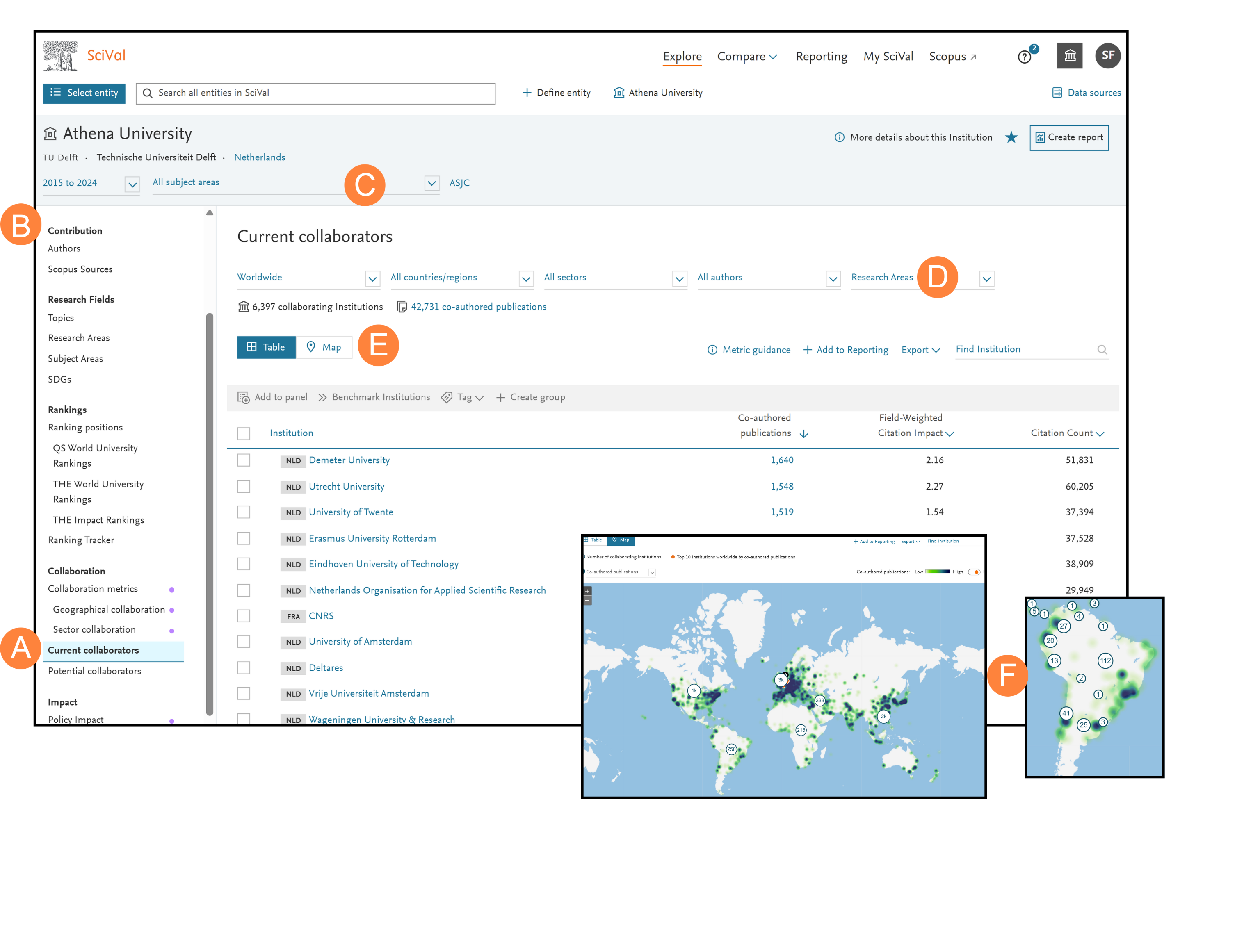
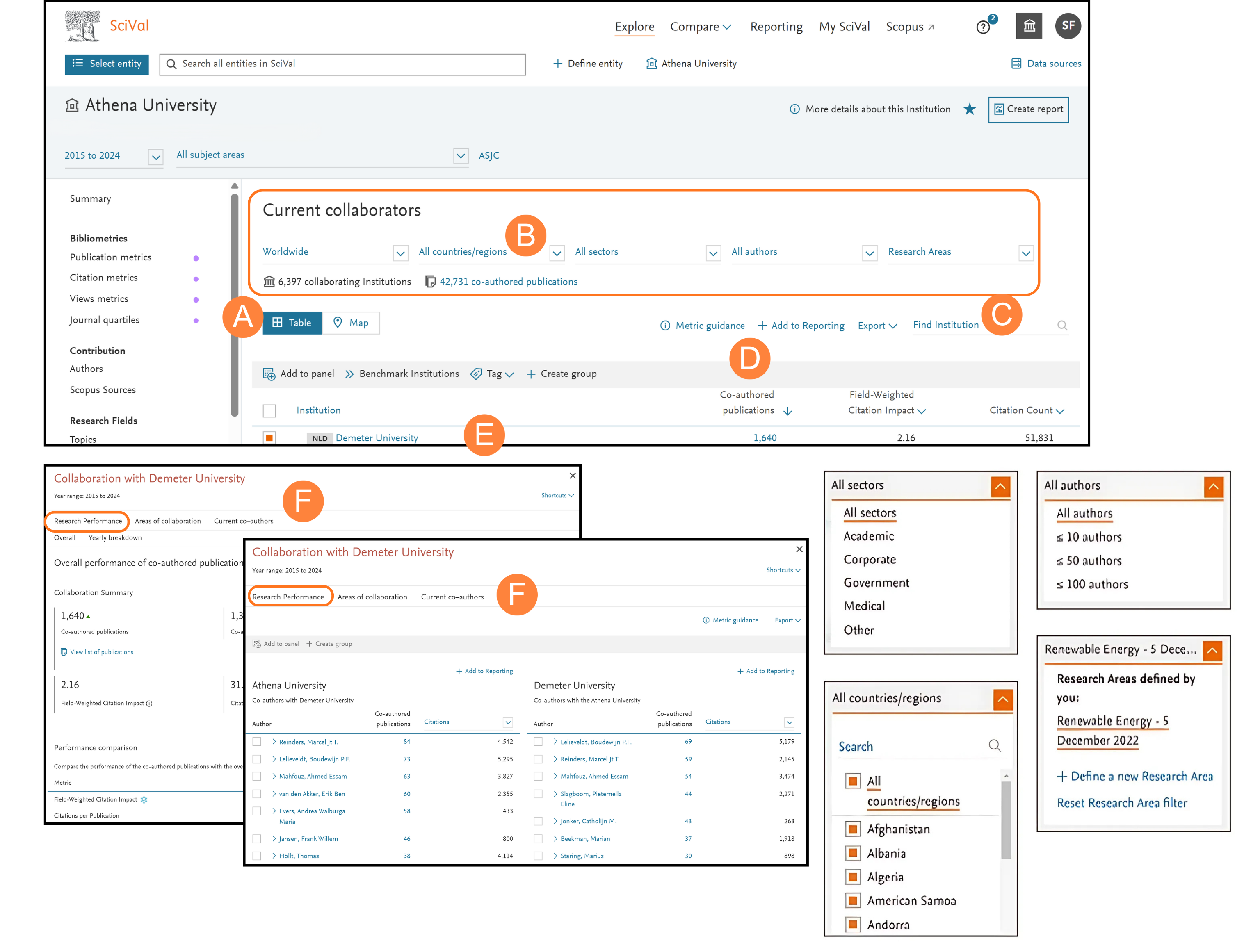
- Select the table view to access the list of collaborating institutions along with some key metrics
- Limit by Countries/Regions, sector, number of authors or by a user-defined Research Area
- Search institutions by name
- Sort Institution list by:
- Co-authored publications
- Field-Weighted Citation Impact
- Citation Count
- Select an Institution of interest to assess the collaborative links more fully across a range of metrics
- Explore the details of the collaboration, including:
- Identifying the key researchers from each institution driving the collaborative links
- Comparing the Institution across Scholarly Output, Total authors and the THE WUR, THE Impact, QS WUR and ARWU Ranking
Evaluate your potential collaboration partners.
Once you have identified Institutions and Researchers to potentially collaborate with, you can take the following steps:
Use the Explore section to:
- Gain a balanced overview of the selected institutions or researchers
- Identify other Researchers of interest
- Explore the institution’s Topics and Topic Clusters
Compare potential strategic partner institutions using the Compare section to:
- Evaluate the selected institutions across a range of metrics
- Model teams and scenarios with researchers of interest
- Benchmark the teams and scenarios against potential competitors or peers
Review the collaboration profiles of Institutions of interest using the Collaboration page to:
- Identify other existing co-author relationships across all subjects
- Analyze collaborators per discipline and further evaluate their success and potential
Did we answer your question?
Related answers
Recently viewed answers
Functionality disabled due to your cookie preferences