
Updates November 2024
Accessibility Improvements
- Enhanced hyperlink visibility: Improved the color contrast ratio for the More registration benefits link on the article search page to at least 3:1. This upgrade enhances accessibility for users with low vision, ensuring they can easily identify and interact with important links.
- Improved navigation for low vision users: Increased hyperlink contrast on the advanced search page for the Stored locally and Sign in links, also achieving a minimum 3:1 color contrast ratio. This change facilitates easier navigation, making the site more user-friendly for individuals with low vision.
- Optimized keyboard navigation: Resolved keyboard navigation issues for sub-subject categories on the main subject area. Users can now seamlessly tab to Browse all titles in Life Science after selecting "Life Science," enhancing usability for those relying on keyboard navigation.
- Other improvements: Including the addition of
<fieldset>for checkbox groups, clearer link purposes, automatic announcements of status messages, and corrected expand/collapse state announcements. These changes ensure better compliance with accessibility standards and improve overall user experience.
Topic pages
- Topic pages now have an option to select the same topic term in another domain where appropriate, providing more relevant and accurate definitions for users.
COUNTER 5.1
- ScienceDirect has completed preparations for the new COUNTER 5.1 code of practice requirements coming into effect January 2025, to produce consistent, comparable and credible usage data.
- Clearer information for screen readers: We've improved how tooltips are handled, ensuring you receive clear and non-redundant information, making your navigation smoother and less confusing.
- Seamless navigation: By fixing the focus issue in the side panel, screen readers now announce tooltip content automatically, allowing you to navigate links effortlessly and get the information you need without interruption.
- Enhanced readability: We've corrected text overlap issues, so you can now enjoy a clearer and more flexible reading experience, with content that adjusts perfectly to your preferences.
- Easier access to support: We've fixed the support center links in the header, making it simpler for you to find help when you need it.
- Rich visual content: You can now explore detailed anatomical images on topic pages in medicine and dentistry, with easy access to additional resources through the Complete Anatomy free layer.
- Updated design: Enjoy a cleaner and more intuitive interface with our latest UI updates, including a refreshed banner design that enhances your browsing experience.
- More resources at your fingertips: We've added 21 new journals to our library, giving you access to a broader range of high-quality content from Bentham Science and Tech Science Press.
- OA options in the journal
- Impact
- Publishing speed
- Acceptance rate
- Article Publishing Charge (APC)
- ISSN
- Subject area
- Aims and scope
- Abstracting and indexing
- The Enhanced Reader has been fully decommissioned
- The new VPAT for ScienceDirect can be downloaded at our accessibility support page.
- The Reaxys side panel that was launched in May now displays interactive structure data from Reaxys, along with links back to Reaxys so that users with access to Reaxys can further analyse that data using the Rx Query Builder and other features. View an example on this articleopens in new tab/window.
- Published 5,000 Highly Cited Chinese Researchers (HCCRs) Scopus Author Profiles on ScienceDirect. The profiles are generated using Scopus data in combination with the names mentioned on the jointly released annual list of Highly Cited Chinese Researchers by Elsevier and Shanghai Ranking Consultancy. Examples of launched profiles include Yang, Xiaojunopens in new tab/window; Cheng, Xin Bingopens in new tab/window; Liu, Fengopens in new tab/window. Read more about the methodology.
- Accessibility improvements:
- Language tagging is now present on the Article page for Recommendations, Citing articles and References for articles not in English. This enables screen readers to seamlessly switch between different languages.
- Search results on Topic index pages are now announced by the screen reader along with the header containing the total number of results.
- The homepage design has been refreshed with an improved search experience.
- The Elsevier media-player now enables in-page playback of multimedia content.
- The Elsevier Enhanced Reader has been disabled for all users.
- The rollout of Scopus author profiles on ScienceDirectopens in new tab/window continues.
- Reaxys on ScienceDirect is now live on 873 journals.
- The following metrics are now available on journal pages:
- Social media mentions
- Mendeley captures
- Number of downloads
- Speed metrics and various other metrics are now available on journal pages.
- We made it possible to contact editors via email where applicable from ScienceDirect Editorial Board pages.
- You can now view Topics related to your search on the Search results page.
- We made Citations counts available on the Search results page for a limited amount of customers. There are plans to make this feature available to all subscribed customers.
- We added an 'Add to Mendeley' button on the Topic pages to save sources from a Topic page directly to your Mendeley Library
- You can now read news, announcements, and find call for papers on every journal homepage.
- Conveniently access your search history and reading history from your personal menu in the ScienceDirect header on every page.
- We implemented a new Accessible Video Player as part of the launch of a new video journal.
- The new ScienceDirect search history functionality is now live.
- A new journal footer has been implemented that features author/editor/reviewer related information.
- The article reference section now gives convenient and quick access to relevant articles from other publishers.
- Personal or institutional subscription options are now available though the ScienceDirect journal homepages.
- We added Partner journals to the journal homepages.
- We launched a ScienceDirect WeChat mini program to make it easier for Chinese researchers to discover content on the go. Learn moreopens in new tab/window.
- We changed the design of the links to other Topic pages on a Topic page to improve the user experience. View an exampleopens in new tab/window of a Topic page.
- When viewing content your organization is not subscribed to, ScienceDirect will let you know with a message at the top of the Article page.
- We released some new features on the Journal homepages:
- The Most popular tab shows the Articles from the last 3 years that have received the most social media attention.
- A link to Author services is now available under Publish in the main banner.
- 5200 German Clinical Topic Pages have been added on ScienceDirect. View an exampleopens in new tab/window.
- The Journal Homepage redesign has been further improved. See an exampleopens in new tab/window.
- We introduced a Corporate Search Experience exclusively to all corporate customers.
- The Journal home page received a makeover. Learn more about the redesigned page on our Journal home page FAQ.
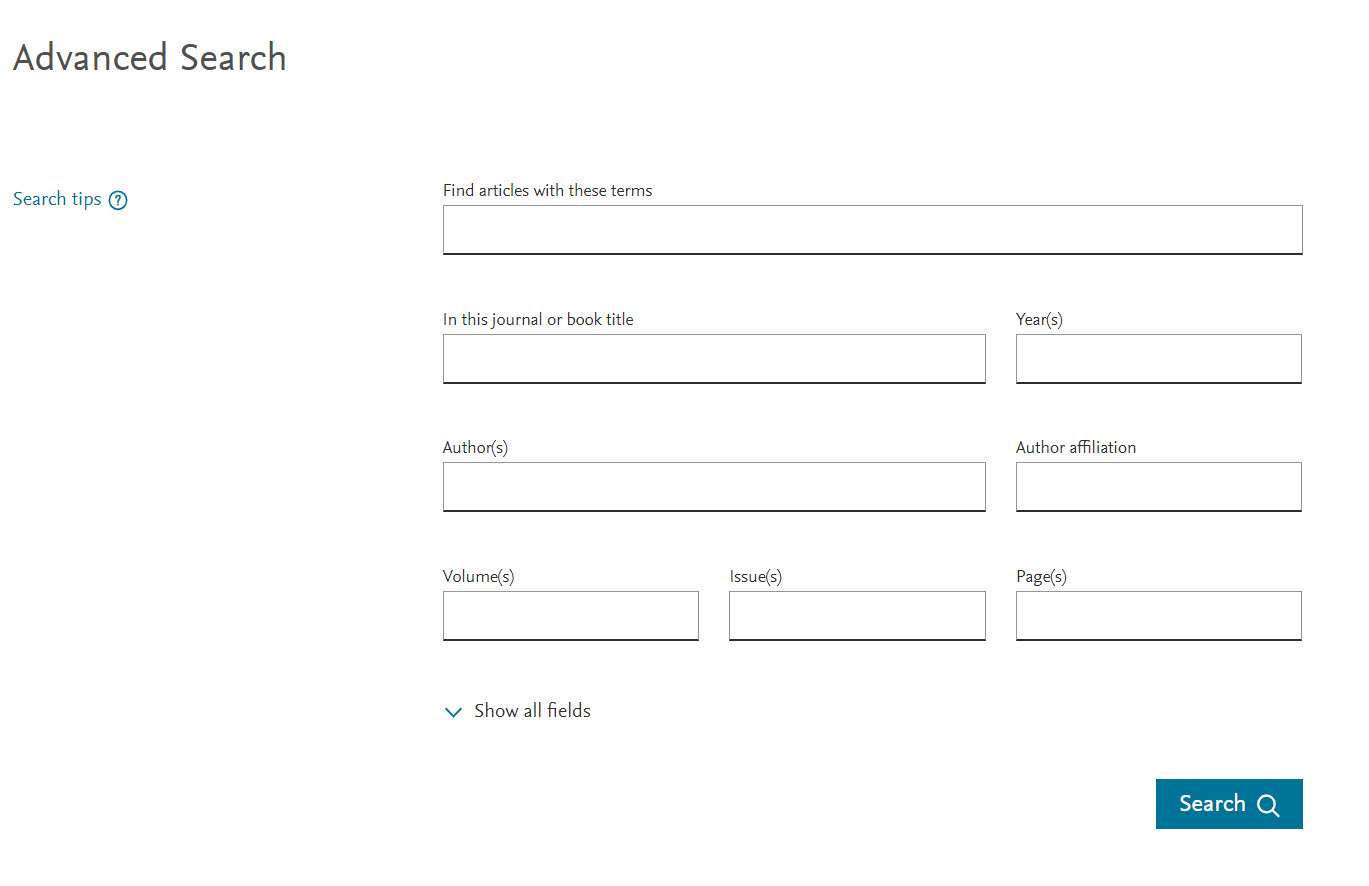
- We improved the design of the Advanced Search form.
- You can now find our accessibility updates on our dedicated accessibility updates page which will be updated quarterly.
- Members of the American Society of Hematology (ASH) and individual users will see personalized links on the article pages of the journal Blood leading to the ASH platform.
- We launched Author Pages for a limited group of authors on ScienceDirect.
- Purchased articles are now available to download for 48 hours.
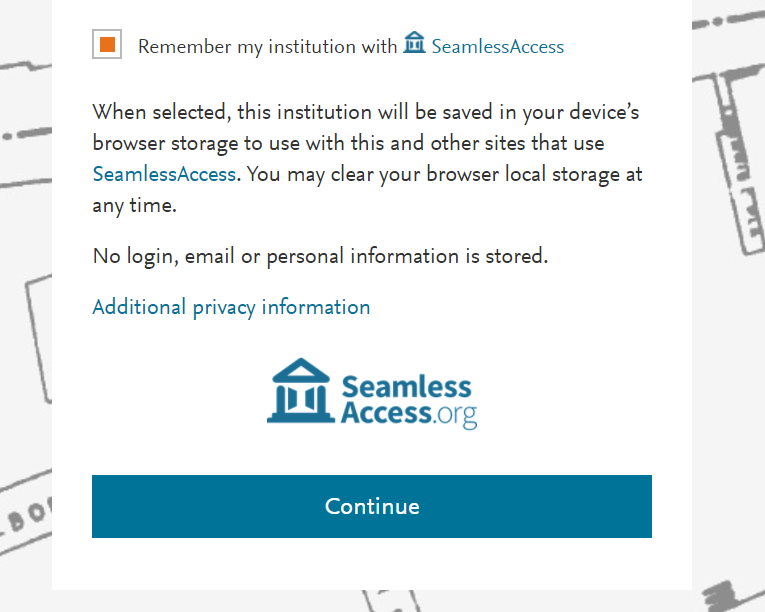
- When logging in through your institution for the first time ScienceDirect will ask for your consent, as part of the SeamlessAccess integration.
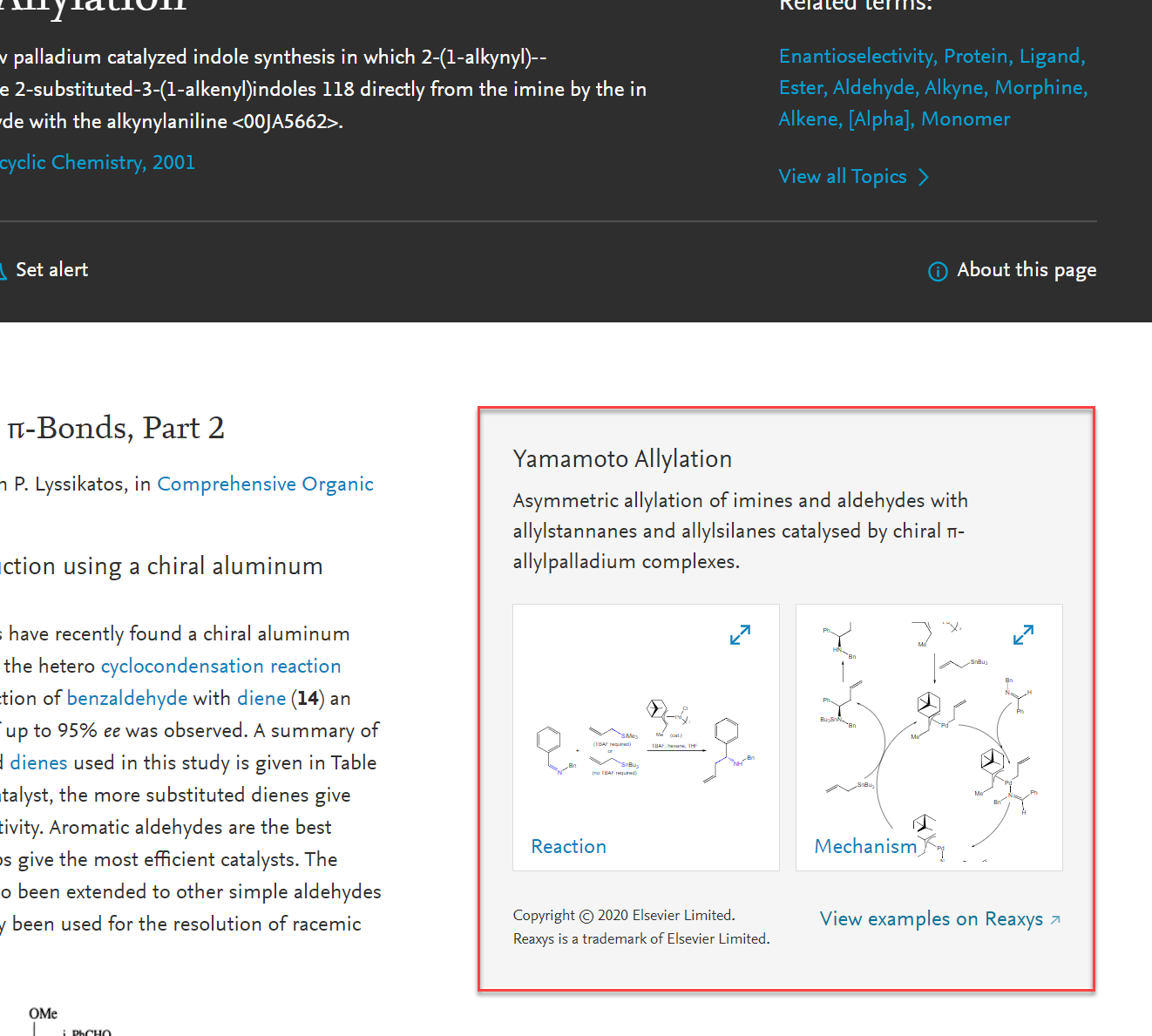
- We’ve enhanced selected topics relating to chemical reactions with Reaxysopens in new tab/window chemical reaction diagrams.
- Review Articles have now been included in ScienceDirect Topic Pages from over 2000 Elsevier journals.
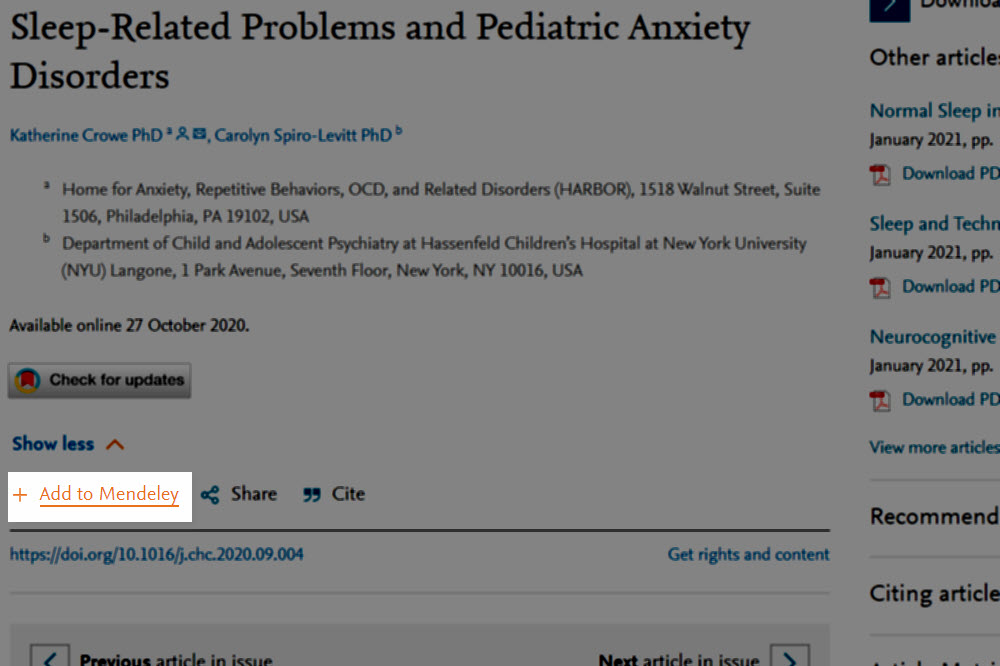
- You can now use the 'Add to Mendeley' button on an article page to cite the article in Mendeley. Learn more about this featureopens in new tab/window.
- We've updated our accessibility conformance report (VPAT) in December, and that it now provides a comprehensive overview of SD accessibility against WCAG 2.1opens in new tab/window (2.0 previously). The updated VPAT is available on our accessibility information pageopens in new tab/window.
- Every journal that publishes datasets now links to Mendeley Data datasets
- ScienceDirect added an additional filtering option on your search results page. You can now restrict your search results based on the subject area of the articles returned.
- When browsing publications on ScienceDirect, you can now limit the publication types displayed to include (or exclude) Textbooks. You can also limit the access type to Open Access publications.
- As part of ScienceDirect’s continuous efforts to improve the time to publication of valuable content, Chapters in Press for books are now available.
- ScienceDirect has improved the journal navigation methods for your mobile devices.
- Search results for the ScienceDirect coronavirus search hub are easily accessible on the new ScienceDirect Covid-19 collections pageopens in new tab/window
- As we continue to participate in the COVID-19 Research Hubopens in new tab/window initiative, ScienceDirect has extended full access to more than 40,000 COVID-related articles to researchers and data scientists focused on Coronavirus vaccine, drug, clinical and other related research.
- ScienceDirect has integrated SeamlessAccessopens in new tab/window to the article page, providing researchers convenient and secure institutional access to articles, anytime, anywhere and on any device.
- To improve your sign-inopens in new tab/window, registrationopens in new tab/window, and remote accessopens in new tab/window experience, ScienceDirect is now fully integrated with Elsevier's Identity Management Systemopens in new tab/window.
- ScienceDirect continues to participate in the COVID-19 Research Hubopens in new tab/window initiative, giving full access to 75 COVID-related journals to researchers and data scientists focused on Coronavirus vaccine, drug, clinical and other related research.
- ScienceDirect’s Topic pagesopens in new tab/window now include Trends (Cell Press) review content to enhance the value for our topic page readers.
- ScienceDirect customers can now access their reading historyopens in new tab/window settings from the User Privacy Centeropens in new tab/window to make it easier to control your personal settings.
- ScienceDirect has implemented a new banner with a link for customers to more easily access documents via their institutions’ subscriptions when they are outside the IP range.
- ScienceDirect has enhanced the remote access functionality with Universal CASA to support customers coming to ScienceDirect from any site.
- When customers are signed in via their institution, the institution icon now displays in the navigation bar. From here, customers can easily change the organization or department associated with their subscription to track usage for reporting or gain transactional or pre-paid access.
- Links to Elsevier’s author guideopens in new tab/window and article submission processopens in new tab/window are now available on your mobile device.
- ScienceDirect has enhanced the journal issue page to include a Table of Contents listing the sections of the issue.
- Chapters-in-Press are now be available on the Reference Collection pages (formerly Reference Modules) in ScienceDirect.
- The growing collection of COVID-19 related articles on the ScienceDirect coronavirus search hub is now available on PubMed Central (PMC)opens in new tab/window in the Elsevier Public Health Emergency Collectionopens in new tab/window.
- ScienceDirect has implemented an Oncology search hub highlighting COVID-19 related oncology research.
- In response to an increased dependence on access through Federated Authentication and Email Domain Confirmation, we have made first steps to improve the user flow through these access mechanisms by displaying clearer access choices when a user cannot access an article.
- Users who are signed in now see their personal citation connections with the article being viewed in the Elsevier PDF readeropens in new tab/window, allowing for better evaluation of the article and further discovery of relevant content. (This a beta release and we cannot guarantee availability of this feature in the future.)
- When you are signed in ScienceDirect, your personal article feedopens in new tab/window is now available on the ScienceDirect home page. Check your article feed to review and access new articles available in the journals you currently follow via journal alertsopens in new tab/window. (This is a beta release and we cannot guarantee availability of this feature in the future.)
- Improved navigation is now available on the journal issue pageopens in new tab/window.
- Where available, ScienceDirect now links the Editorial board information on some journal home pagesopens in new tab/window to their profile pages available in Mendeley.
- On the ScienceDirect search results pageopens in new tab/window, you can now filter the results to include only subscribed content. At the moment, this only works for customers who participate in Google Scholar Subscriber Links and only covers active journals.
- An enhancement to the ScienceDirect header now clearly indicates the customer’s institution association.
- New Reference Collectionopens in new tab/window pages (formerly Reference Modules) are now available in ScienceDirect
- Access to DeepDyve is no longer available via ScienceDirect.
- ScienceDirect has added a banner which includes a link to details about remote access on ScienceDirect and a link for librarians and administrators to request remote access for their users.
- More than 20,000 relevant ScienceDirect articles and chapters were added to Elsevier’s Novel Coronavirus Information Centeropens in new tab/window in March and are free to access.
- Information found in Elsevier’s Novel Coronavirus Information Centeropens in new tab/window has been delivered to PubMed Central (PMC) and Semantic Scholar for text-mining to further support researchers.
- You can now download supplementary material in the Elsevier PDF Reader.
- ScienceDirect has added search functionality to the Topic Index. You can now begin entering a keyword in the topic index search bar and ScienceDirect will automatically advance the Topic Index to the appropriate topic page links.
- ScienceDirect has improved the navigation on the journal issue page, adding a “Go to the top” button and “Previous and Next vol/issue” buttons at the bottom of the issue table of contents.
- Through our efforts to make ScienceDirect accessible to individuals with disabilities and impairments, ScienceDirect’s accessibility statement scored 97% in the Accessibility Statements Promoting Improved Reading Experience (ASPIRE) audit. This is an improvement from the 50% audit score in 2018.
- To support researchers, physicians, and the public, ScienceDirect has made the most relevant research on Novel Coronavirus (COVID-19) available free of charge. Links to the Elsevier’s Novel Coronavirus Information Center are also available in ScienceDirect on related topic pages and search results pages.
- ScienceDirect has reduced the duplication of information in the topic pages.
- ScienceDirect now includes the option to download the entire book-series and handbook from which the topic information originated.
- As part of the continuous effort to protect ScienceDirect’s extensive content from bot activity and abuse, ScienceDirect now limits the total number of PDF downloads on the journal issue page to 250 documents per day when using the multiple download functionality.
- ScienceDirect has improved author search results by clearly highlighting the author searched in the results list.
- ScienceDirect has simplified the “Get access” feature on the article page. The Check access requirement has been eliminated for customers that are authenticated with an institutional account. Now, when those customers select “Get access”, the available access options are immediately provided.
- The ScienceDirect topic pages now include the option to download the entire book from which the topic information originated.
- When an article is not part of your ScienceDirect subscription but is part of your Clinical Key subscription, ScienceDirect now includes a direct link to the full-text article in Clinical Key for your easy access.
- The Elsevier PDF reader has been enhanced to include a full figure viewer. With this, you can now get a look at the full figure (with its captions) and download the figure separately.
- From a ScienceDirect topic page, you can now download the entire book from which the topic information originated.
- The Elsevier PDF reader has been enhanced to include a panel to preview the figures which may appear in the article.
- Article highlights, extracted directly from the article content, are now available as a proof of concept for a limited number of articles in computing, economics, and biology when you view the document in the Elsevier PDF reader.
- As part of the continuous effort to protect ScienceDirect’s extensive content from bot activity and abuse,
- From the article page, ScienceDirect now limits the number of PDF downloads to 100 documents per day
- From a journal special issue, ScienceDirect now limits the “Download PDF” and the “Download All Articles” features to 10 documents per day
- ScienceDirect no longer requires you to sign in to your ScienceDirect account in order to download multiple documents from:
- Journal issue page
- Search results page
- Recommended articles (which may be offered in a modal window on the article page)
- ScienceDirect has temporarily reverted to our legacy authentication system while performance issues are being address in Elsevier's new Identity Management System.
- You can now download all supplementary files that appear in an article in one request. (Max 50 files.)
- Signing in to ScienceDirect is no longer required to download special journal issues.
- The option to download the full journal issue from the article page is now available.
- The Mendeley Web Importer browser extension (BRXT) now opens PDFs directly in the Elsevier PDF reader.
- To meet the browsing preference of chemists, graphical abstracts in the chemistry journals now display expanded by default in ScienceDirect.
- Approximately 1,500 article collections from Elsevier premium journals were added to ScienceDirect’s journal offerings.
- To improve your sign-inopens in new tab/window, registrationopens in new tab/window, and remote accessopens in new tab/window experience, ScienceDirect is now integrated with Elsevier's new Identity Management Systemopens in new tab/window.
- The book chapter excerpts found on the Topic pageopens in new tab/window now include the option to 'Purchase book' if you are not entitled to download the book chapter.
- As part of the continuous effort to protect ScienceDirect's extensive content from bot activity and abuse, on the journal issue pageopens in new tab/window, ScienceDirect now limits the number of PDF downloadsopens in new tab/window to 10 issues or 250 articles per day.
- A journal status filter is now available on the Journals & Books browse pageopens in new tab/window so you can restrict the list to journals which are currently accepting authors’ article submissions.
- Your ScienceDirect reading history page includes the last date and time you viewed the article/chapter. Now, we include an additional timestamp in the article/chapter history for the 'Last download' of the PDF.
- Search functionality has been added to the ScienceDirect global header. With this, you can now perform a search from anywhere in ScienceDirect.
- To more clearly identify the earliest in-press documents (which include publisher intervention and enhancements), ScienceDirect has re-named this in-press document-type Journal pre-proof.
- We have improved the look and feel of the Elsevier PDF reader by adding multi-panels to enable nested previews of related information without crowding the document displayed. And, in the related information panels, we added the new article preview feature.
- On the journal home page, ScienceDirect added links to the most downloaded articles.
- A responsive design was released for the journal home page and volume/issues for a better experience on your mobile or tablet.
- Your ScienceDirect reading history page has been enhanced to include a preview feature. You can now preview the document’s abstract, if available, on your reading history page.
- Also, on the reading history page, if the document is part of your subscription, a Download PDF link is now available.
- The Elsevier Reader now supports all PDF documents in ScienceDirect.
- New navigation has been added to book chapters in ScienceDirect. Now, when you are reviewing a book chapter, 'Next' and 'Prev' buttons are available so you can easily move to another chapter in that book.
- When a journal has a partnership with a mirror journal (an open access journal with the same aims & scope, editorial board, submission system, and rigorous peer review as the partner journal), there is now prominent linking from the partner journal to the mirror journal and vice versa.
- Your ScienceDirect reading history page has been enhanced. The article/chapter information now includes a link to the publication home page and the most recent date and time you read the document.
- On the topic page, if you are subscribed to the book from which the topic information originates, the Download chapter PDF feature is now available to you.
- In the Elsevier PDF reader, you now have the option to add the document to your Mendeley library.
- On the journal home page, the journal’s CiteScore and Impact Factor are now available.
- When you are signed in, ScienceDirect can now store the documents you read in your reading historyopens in new tab/window so you can easily retrieve them again.
- You can now download a full journal issueopens in new tab/window in one request.
- The journal’s top 8 cited articles are now available on the journal home pageopens in new tab/window.
- The search feature on the journal home pageopens in new tab/window has been improved so you can quickly find articles in the journal which contain your search terms.
- In the ScienceDirect topic pagesopens in new tab/window, related terms are now linked to associated topic pages to broaden the concepts.
- As part of our effort to align the Elsevier products and websites, the global header has been implemented on ScienceDirect. Once implemented on all the Elsevier products, the customer experience will be seamless.
- On the advanced search formopens in new tab/window, if ScienceDirect detects your search query is not going to return any results, we now display a zero results warning. You can then correct any typos or modify your query before submitting your search request. (This feature is available to customers only.)
- We resolved 11 accessibility issues across ScienceDirect to improve keyboard access, focus order, skip link availability, and list structure.
- On the ScienceDirect book home pagesopens in new tab/window, you can now easily access related books and journals to support and expand your ScienceDirect research.
- The Download PDF feature has been enhanced on the article page. When you are signed inopens in new tab/window ScienceDirect, you can now download a full special issue as a PDF on the article page.
- On the ScienceDirect article page, you can now easily share the article with your colleagues via your Facebook, LinkedIn, Twitter, or email account.
- New Topic pages are now available in ScienceDirect. New topic domains include Computer Science, Engineering, Mathematics, Physics and Astronomy, Economics, Econometrics and Finance, Psychology, and Social Sciences. With these additions, the taxonomy across all 20 topic domains has been enhanced.
- On the Topic Index page, you can now search for a topic of interest. A pagination feature has also been added so you can easily navigate through the topic index.
- In the Journal Info section of the home pages for the journalsopens in new tab/window, book series and handbooksopens in new tab/window, ScienceDirect now provides Aims & Scope information so that you can learn goals of the publications, as well as the benefits of using the publications in your research.
- The Topic pagesopens in new tab/window in ScienceDirect now include images. These images enhance and further validate the content of the Topic page for a more compelling reading experience.
- The journal home pageopens in new tab/window has been enhanced so you can now more easily navigate to the journal issue lists, articles in press, and set up journal alerts or RSS feeds.
- ScienceDirect has made accessibility enhancements to the books, reference works, and reference modules pages with improved keyboard focus and alternative (hover) text.
- ScienceDirect has added a toggle-switch to preview the graphical abstracts on the articles in press document lists.
- As part of the continuous effort to protect ScienceDirect's extensive content from bot activity and abuse,
- On the search results page, ScienceDirect now limits the number of PDF downloadsopens in new tab/window to 100 documents per day.
- ScienceDirect now requests you sign in to your ScienceDirect accountopens in new tab/window to download:
- Multiple documents from the journal issue page
- More than 10 documents from the results page
- Recommended articles which may be offered in a modal window on the article page
- The Set search alertopens in new tab/window feature is now available on the quick search results page. You can now set search alerts for your quick search requests and your advanced search requests.
- The Download as PDF feature has been added to the topic pages. When you are signed in ScienceDirect, you can now download a topic pageopens in new tab/window as a PDF.
- The Save as a .CSV feature has been added to the Journal & Book series alerts page and the Search alerts page. From your My alertsopens in new tab/window pages, you can now download your alerts details as a .CSV file.
- An access and entitlement indicatoropens in new tab/window now appears above each article title on the search results page and the journal pages.



- On the recently redesigned Journals & books browse page, you can now also filter the publication list to include subscribed and complimentary publications. For more information about the browse page filters, see How can I filter when browsing journals/books?opens in new tab/window
- In the Elsevier PDF readeropens in new tab/window, you can now search for specific terms or keywords within the document you are viewing. Elsevier PDF reader will highlight the content of the document which contains your search terms.
- The new Manage search alerts page is now available on ScienceDirect. For information about managing your new search alerts, see How can I set and manage my alerts?opens in new tab/window
Previous updates
Update October 2024
New Link Resolver Implementation on ScienceDirect
Earlier this week, ScienceDirect launched a new implementation of link resolvers, enhancing the access bar with a new link resolver component. This update helps you access electronic resources like journal articles and e-books by interpreting metadata and directing you to the full text available through your institution's subscriptions.
The new system connects directly to the link resolver configuration database, generating links on demand and caching the configuration for improved performance. This update also includes bug fixes, support for various URL formats, and enhanced logging to identify and correct misconfigurations. These improvements significantly reduce the time you need to update OpenURL configurations from two weeks to just one hour, streamlining your access to resources.
Other updates
Updates October 2023 – February 2024
Finding the right Elsevier journal
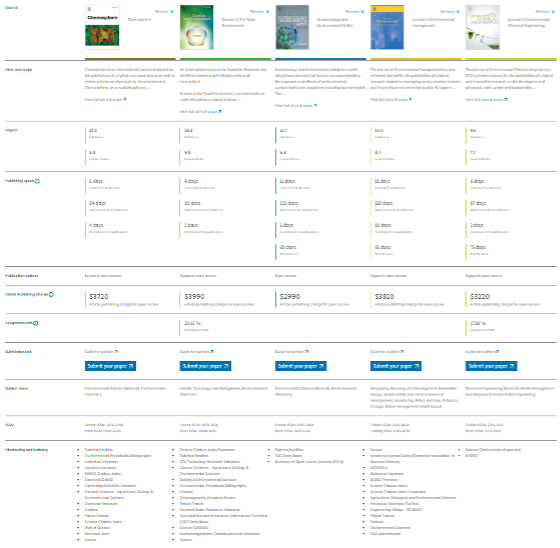
Journal Compare on ScienceDirect allows you to quickly assess the best journal for you to submit your research by comparing any journal on ScienceDirect on one screen. Currently available from 200 journal home pages.
Comparison points include (where available):
Start your journey at https://www.sciencedirect.com/compareopens in new tab/window
Journal home pages include full editorial board in diversity metric
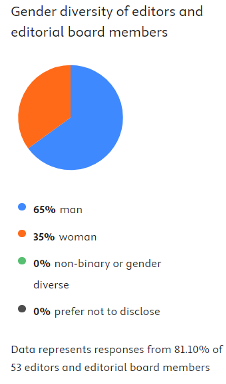
The Editorial Gender Diversity Metric now covers the full editorial board to provide a complete view of gender diversity on journal editorial boards. It can be found on the About – Editorial Board page.
ScienceDirect Cookie Banner was released, building credibility and trust among customers
The Cookie Banner allows users to have full control of their privacy options on ScienceDirect. Privacy settings can be updated from the cookie banner or the Elsevier Privacy Center. Further, ScienceDirect is focused on obtaining ISO27001 (an Information Security Management System) and ISO27701 (a Privacy Security Management System) from the International Organization for Standardization (ISO) in 2024. These accreditations demonstrate ScienceDirect’s commitment to protecting the sensitive information and privacy or our customers and users.
ScienceDirect continues to publish content from partner publishers
New publishers added content to ScienceDirect including Brill with 14 journals, Emerald with 15 journals, the University of Chicago Press with 5 journals, and the American Society of Microbiology with 6 journals. The addition of these partners enhances ScienceDirect’s breadth of content, helping researchers find relevant academic papers more efficiently. Find out more at https://www.sciencedirect.com/org.
ScienceDirect is experimenting with innovative ways to create value for the scientific community using Generative AI
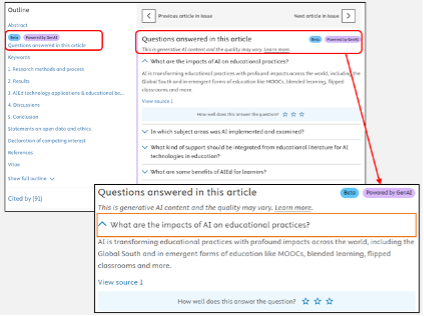
One of the GenAI experiments in ScienceDirect is the Questions Asked in the Article feature, which currently appears on ~20k articles across ~220 journals in Computer Science, and provides pre-generated questions and answers on the full-text article.
The top 5 most relevant questions and their answers are shown with reference to where the answer comes from in the article. We are monitoring interaction with and feedback on the feature to continue developing AI solutions on ScienceDirect that enhance the researcher experience.
Accessibility and Security
Updates Jun-Sep 2023
Jan-May 2023
ScienceDirect made the following enhancements in January 2021:
Articles which have been revised after publication will now be delivered as a combined PDF which includes the original version as well as the revised one to provide a full and complete record of the article. Read more about this featureopens in new tab/window on Elsevier Connect.
ScienceDirect made the following enhancements in December 2020:
ScienceDirect made the following enhancements in November 2020:
ScienceDirect made the following enhancements in October 2020:
ScienceDirect made the following enhancements in September 2020:
ScienceDirect made the following enhancement in August 2020:
Recommended publications (including journals, monographs, book series, handbooks, major reference works and the Reference Collections) are now available on the ScienceDirect Topic Pagesopens in new tab/window where you can find more information related to the topic you are researching.
ScienceDirect made the following enhancements in July 2020:
ScienceDirect made the following enhancements in June 2020:
ScienceDirect made the following enhancements in May 2020:
ScienceDirect made the following enhancements in April 2020:
ScienceDirect made the following enhancements in March 2020:
ScienceDirect made the following enhancements in February 2020:
ScienceDirect made the following enhancements in January 2020:
ScienceDirect made the following enhancements in December 2019:
ScienceDirect made the following enhancement in November 2019:
ScienceDirect made the following enhancement in October 2019:
As part of the continuous effort to protect ScienceDirect’s extensive content from bot activity and abuse, document download limits remain in effect.
ScienceDirect made the following enhancements in September 2019:
ScienceDirect made the following enhancements in August 2019:
ScienceDirect made the following enhancements in July 2019:
ScienceDirect made the following enhancements in June 2019:
ScienceDirect made the following enhancements in May 2019:
ScienceDirect made the following enhancements in April 2019:
ScienceDirect made the following enhancements in March 2019:
ScienceDirect made the following enhancements in February 2019:
ScienceDirect made the following enhancements in November 2018:
ScienceDirect made the following enhancements in October 2018:
ScienceDirect made the following enhancements in September 2018:
ScienceDirect made the following enhancements in August 2018:
Did we answer your question?
Related answers
Recently viewed answers
Functionality disabled due to your cookie preferences