
Release notes for March 2022
Last updated on March 09, 2026
Guided by customer feedback, Reaxys is continuously improving the Predictive Retrosynthesis module and our Retrosynthesis feature, so users can have better options for project management and collaboration.
What is included as part of this release?
Improvements to export and collaboration options
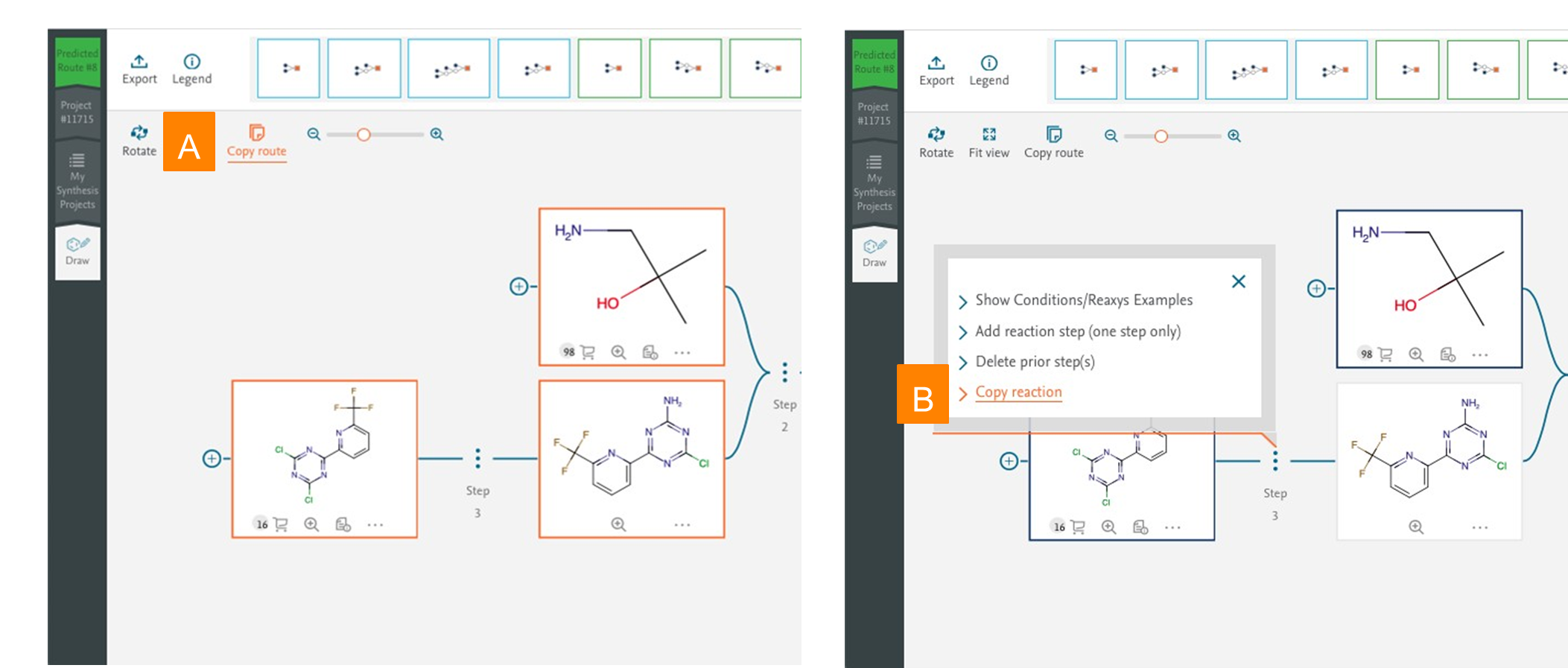
- Copy synthesis tree to preferred drawing tool: Users can now copy the entire synthesis tree to the clipboard (A) and paste it into other external tools, like Marvin or ChemDraw, to more easily publish or share with colleagues.
- Copy reaction step: Users can now copy an individual reaction step from the synthesis tree to the clipboard (B), so that they can paste it into MarvinJS or ChemDrawJS for querying in Reaxys, or into other external tools for publishing or sharing with colleagues.
Export retrosynthesis plans as RD file: In addition to exporting synthesis plans, users can now export synthesis trees in Reaction Data File format (.rdf), so that they can reimport them into many chemoinformatic tools for analysis and modelling (e.g. using RDKit, CDKit, etc.).
More options to start and set up your retrosynthesis search
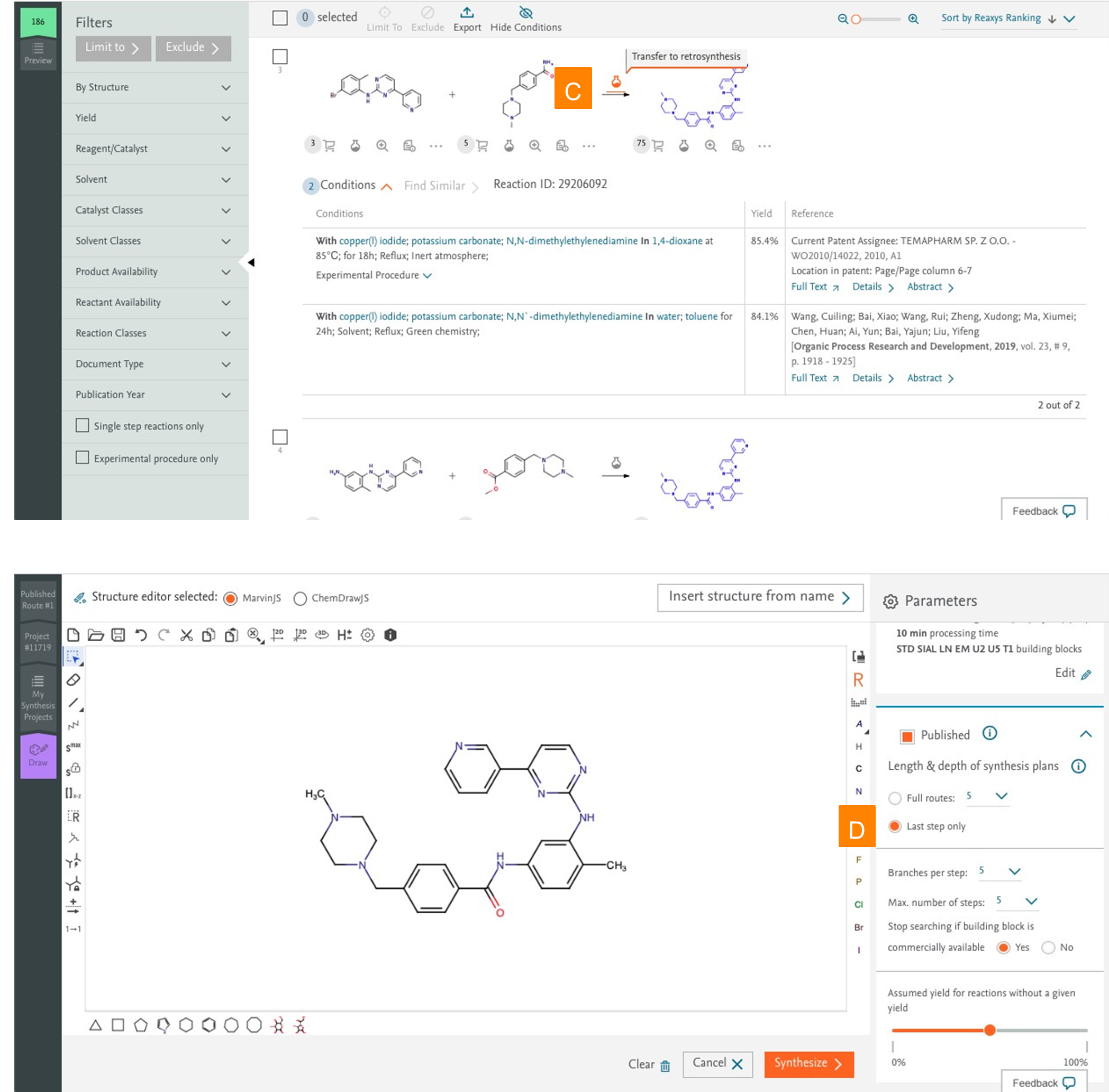
- Transfer from Reaxys reactions results page to retrosynthesis: Users can better control the start point of a retrosynthesis search (C).
“Last step only” option for published retrosynthesis: Users can now run “last step only” search for published retrosynthesis (D) . This option was previously only available for predicted retrosynthesis.
Better visibility of commercial substances’ availability
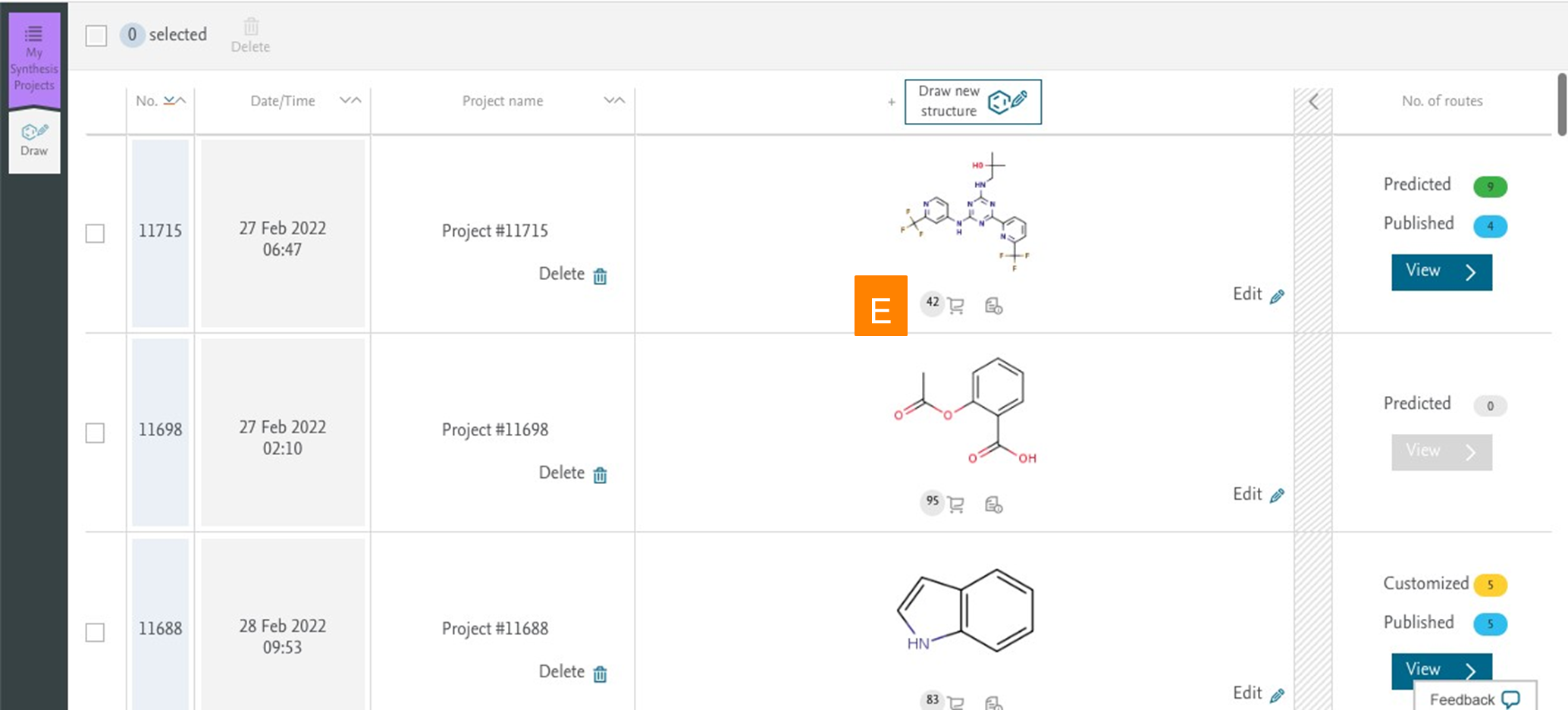
- Projects page: The shopping cart for commercially available substances and the View Details icon will be shown on the projects page (E).
Edit synthesis plan pop-up: Users can make a more informed choice when selecting which published and/or predicted reaction step to add to the synthesis plan by having the shopping cart and View Details icon displayed.
What’s next:
- Break and Protect Bonds: New Retrosynthesis features will give chemists more ability to obtain relevant results by defining which bonds to break or protect.
- An updated Predictive Retrosynthesis model with the latest reaction data, increasing the coverage of reactions and providing better predictions.
Did we answer your question?
Related answers
Recently viewed answers
Functionality disabled due to your cookie preferences