
View by category
What do the bubbles on the wheel of science represent?
Last updated on November 15, 2024
Also available in
 Back to Topics FAQs
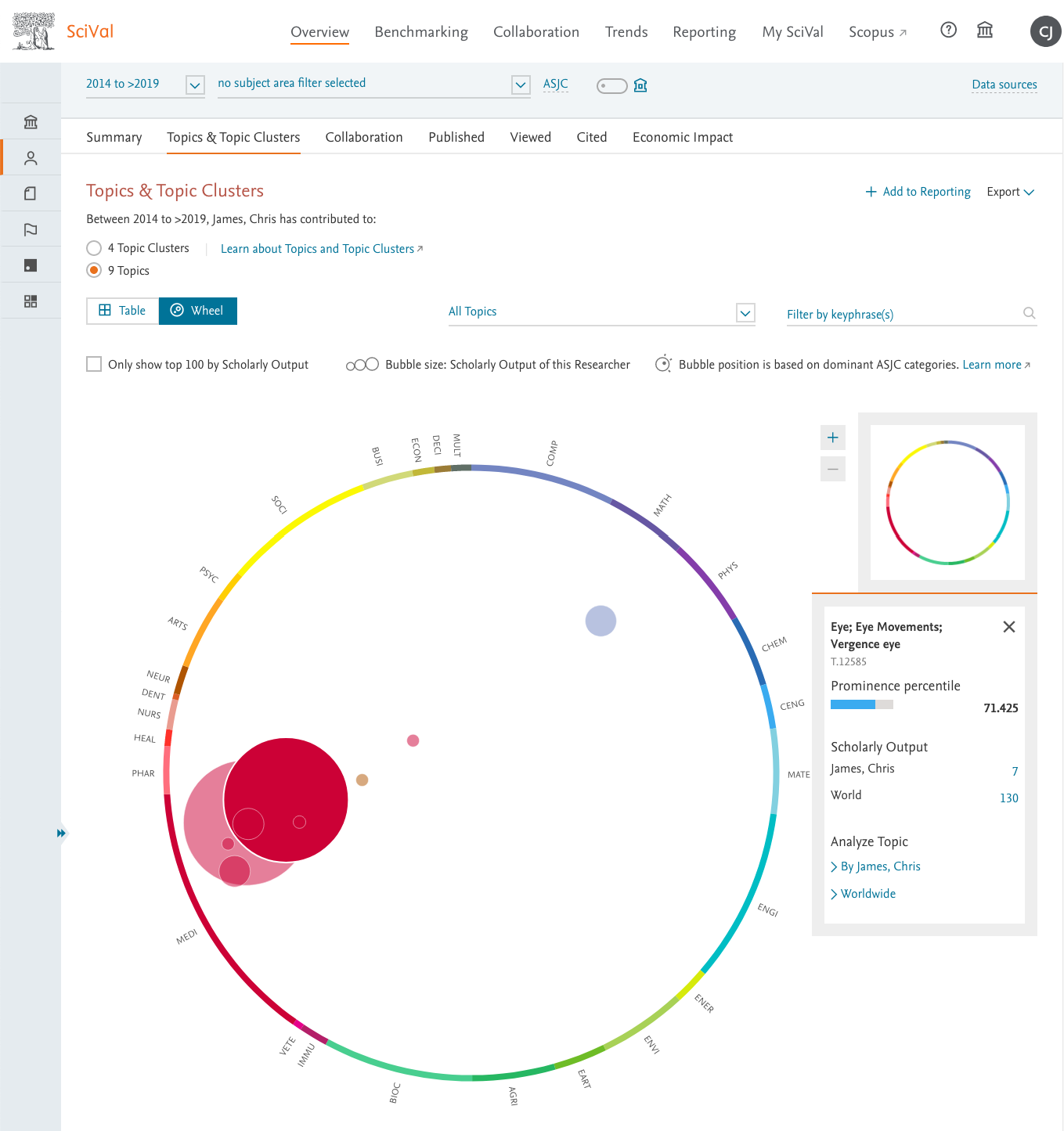
- Each bubble represents a Topic or Topic Cluster (depending on the view you’ve chosen).
- The size of the bubble indicates the output of the entity in the Topic or Topic Cluster.
- This means the same Topic can be different sizes for different entities, but positioned in the same place on the Wheel (see below).
- The position of the bubble is based upon the ASJC categories of the journals in which the Scholarly Output is published.
- The position relates to the Topic as a whole and is not affected by the entity you are looking at.
- The more influence an ASJC has over a Topic, the closer it will bring the Topic to its side of the Wheel of Science. As a result, the Topics closer to the center of the Wheel are more likely to be multidisciplinary, compared to the Topics towards the edge of the Wheel.
- Note that a Topic may be placed at the edge of the Wheel, but still be considered multidisciplinary because it is equally influenced by a number of ASJCs that are located on the same side of the Wheel.
- The calculation for the bubble size is:
maxRadius = 80
minRadius = 8
denominator = maxVal - minVal
if(denominator == 0) { denominator = 1 }
Topic Circle radius = ((maxRadius - minRadius) * (scholarlyOutputofTopic - minVal) / denominator + minRadius) - The "max" and "min" values are based upon the scholarly output values of the topics for the entity for the selected time period and subject area
- This means that the "max" value can vary from one time period and subject area to another
In the example below, the researcher has published 7 Scholarly Outputs in the Topic of Eye; Eye movements; Vergence eye. Worldwide there are 130 Scholarly Outputs in this area between 2014 to >2019. This Topic has articles published primarily the ASJCs of Medicine and to a lesser degree in Neuroscience, which is why the bubble is placed to the edge of the Medicine subject area on the Wheel.
Did we answer your question?
Related answers
Recently viewed answers
Functionality disabled due to your cookie preferences