
View by category
We have expanded SciVal from being a purely evaluative and analytical tool to being an integral part of your research planning process. You can run a complete portfolio analysis to see which Topics your institution is currently active in, and which Topics have high momentum, those therefore more likely to be well-funded. Topics will give you insights into which researchers are active in those Topics, which Topics your peers and competitors are active in and the related Topics of which you should be aware.
A Topic is a dynamic collection of documents with a common focused intellectual interest.
- Topics can grow or decline (year on year), be large or small, new or old and are often multidisciplinary
- There are around 95,000 Topics and 1,500 Topic Clusters in SciVal, that have been formed through a method of direct citation linking
- A publication can only belong to one Topic and one Topic Cluster
- Each week new publications are allocated to the existing Topics and Topic Clusters
Topics are ranked by Prominence, an indicator of the momentum of a particular field.
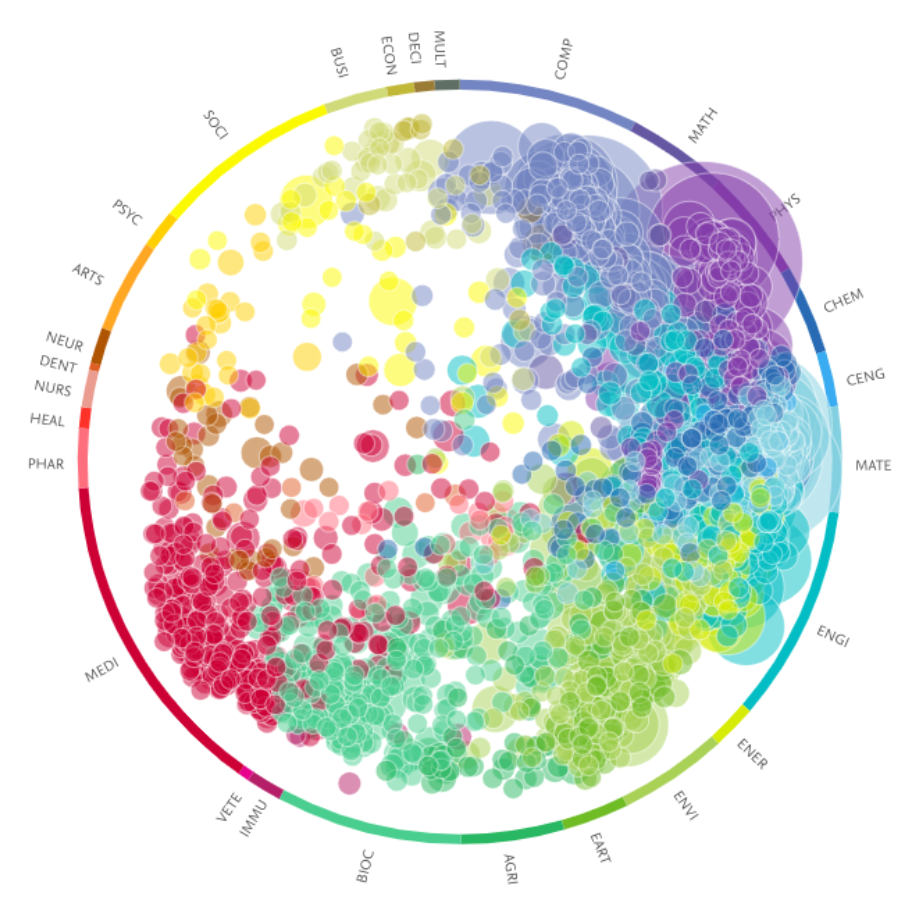
Our ground-breaking, new technology takes into consideration 95% of the articles available in Scopus from 1996 – current date and clusters them into nearly 95,000 global, unique research topics based on citation patterns.
How can I use Topic Prominence in Science?
What is a Topic?
How are Topics created?
What are Topic Clusters?
How many Topics or Topic Clusters can one publication be categorized in?
How can I get an overview of all Topics and Topic Clusters?
What are next generation SciVal Topics?
What does the launch of new generation SciVal Topics mean for the previous generation Topics?
What is prominence?opens in new tab/window
How does prominence relate to funding?opens in new tab/window
How are the names of Topics and Topic Clusters generated?opens in new tab/window
How can I give feedback on the Topic and Topic Cluster names?opens in new tab/window
What do the bubbles on the wheel of science represent?opens in new tab/window
How are Topics and Topic Clusters assigned to ASJC categories?opens in new tab/window
Which entities can I analyze based on the Topics and Topic Clusters?opens in new tab/window
How are Representative publications in Topics chosen?opens in new tab/window
How are Key Topics for an entity calculated?opens in new tab/window
What are related Topics?opens in new tab/window
What is the clustering methodology for Topic Clusters?opens in new tab/window
How can you distinguish between a Topic and a Topic Cluster?opens in new tab/window
For further information regarding the methodology, how Prominence is calculated and assigned and other FAQs please see the following papers and documents:
Research Portfolio Analysis and Topic Prominenceopens in new tab/window Richard Klavans and Kevin W. Boyack
Identifying Emerging Topics in Science and Technologyopens in new tab/window Henry Small, Kevin W. Boyack and Richard Klavans
Which Type of Citation Analysis Generates the Most Accurate Taxonomy of Scientific and Technical Knowledge? opens in new tab/windowRichard Klavans and Kevin W. Boyack
A New Methodology for Constructing a Publication-Level Classification System of Scienceopens in new tab/window Ludo Waltman and Nees Jan van Eck
Top universities and researchers in perovskite solar cell researchopens in new tab/window In the first of a regular series looking at who is producing highly cited research in different areas, THE explores a subject currently deemed the ‘most prominent’ by Elsevier metrics
The dawn of predictive analytics to measure research performance: SciVal’s Topic Prominenceopens in new tab/window Elsevier Connect by Martin Edling Andersson
Did we answer your question?
Related answers
Recently viewed answers
Functionality disabled due to your cookie preferences