
View by category
Quacquarelli Symonds World University Rankings - QS WUR
Last updated on November 15, 2024
Also available in
The QS World University Rankings are released on yearly basis by QSopens in new tab/window.
For more information on the QS World University Rankings, please visit the QS websiteopens in new tab/window. Details of the criteria for participation, submission requirements and calculations can be found in the QS WUR methodology documentopens in new tab/window.
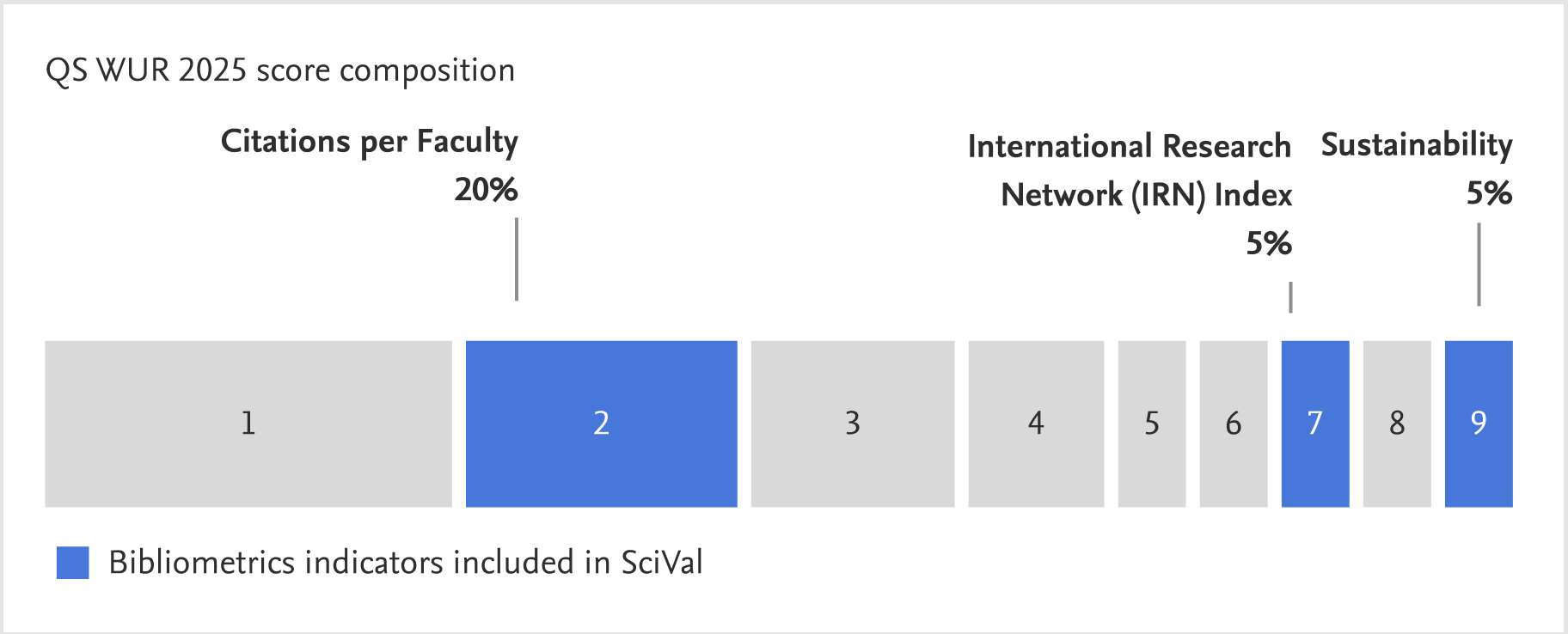
In the ranking's calculation, bibliometrics data are used to calculate the Citations per Faculty (20%) and International Research Network (5%), and Sustainability (5%) indicators scores.
Note: We offer the possibility to analyze the bibliometrics underlying the above-mentioned indicators. Such metrics are taken by the QS team and used as the base for creation of the final scores.
Learn more about the metric calculations
QS WUR 2024 enhancements in the Overview module
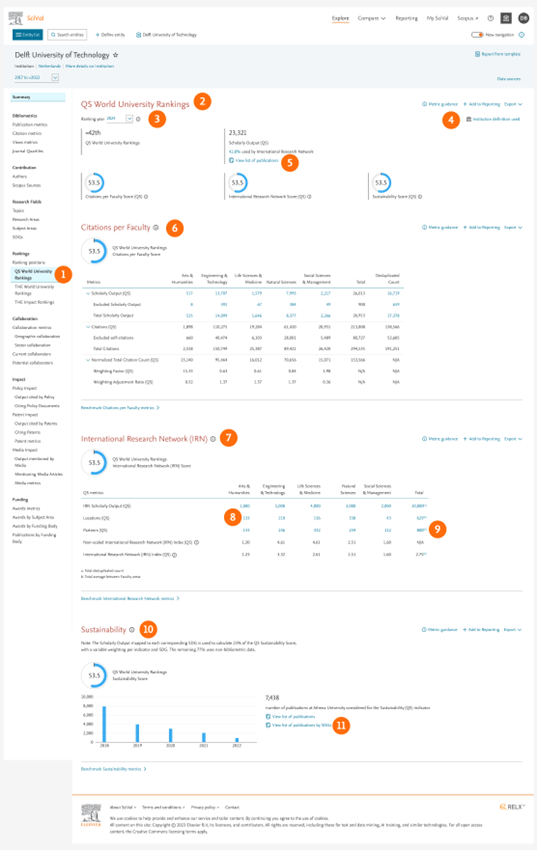
- "QS World University Rankings" tab in the 'Rankings' section helps SciVal customers:
- Generate insights based on the bibliometric data used in the QS World University Rankings, removing the need to manually export and generate the datasets.
- Analyze, understand, and generate insights based on the actual metrics used in QS rankings, including the Citations per Faculty and International Research Network indicators.
- Summary of metrics
Offers an at-a-glance view of the QS’s top level metrics used to calculate the corresponding QS scoring indicators, based on bibliometrics data. - Switch between two ranking years 2024 and 2025. Learn more
- Institution definition used
List all the affiliations considered part of the University (Institution) in the rank’ calculation. - Access the publication list
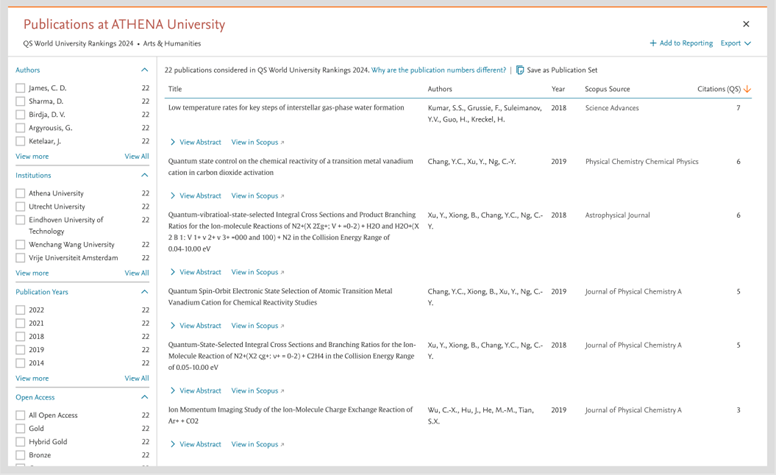
- Clicking on a “view list of publications” link launches a modal in which the publications underlying the Scholarly Output related to the different metrics.
- For further analysis, you can export the publications into a spreadsheet or save the list as a Publication Set.
- Citations per Faculty: 20%
- The table aims to clarify the Normalized Total Citation Count, by showing a detailed view of the publications, citations and other metrics included in the calculation.
- The Citations per Faculty indicator makes up 20% of the final ranking score. It is a measure of the relative intensity and volume of research being done at an institution, relative to each institution’s size as determined by the number of academic faculty an institution has. Publications from the most recent five-year period and citations to these publications in a six-year period are considered.
- International Research Network (IRN): 5%
- Gives more details on the metrics used to calculate the IRN index.
- The International Research Network Index makes up 5% of the final ranking score. It is an indicator of the strength and diversity of an institution’s research network, as determined by sustainable research partnerships with international higher education institutions.
- Locations:
The number of international locations (countries) represented by the Partners (QS), with at least one Partner. It's used to calculate the QS International Research Network (IRN) Index.
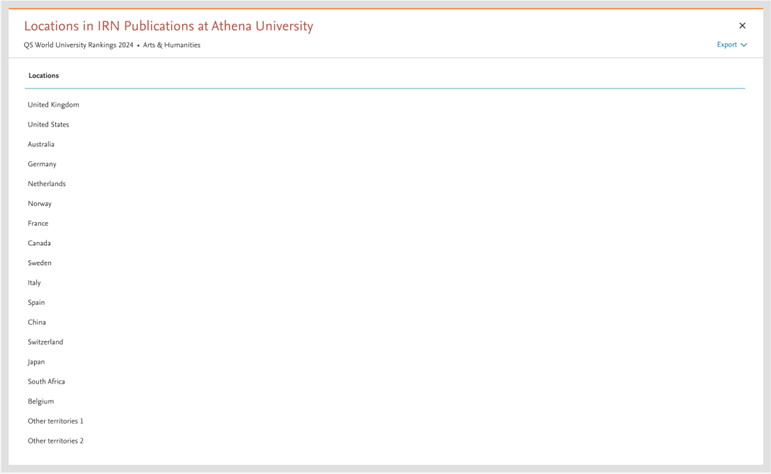
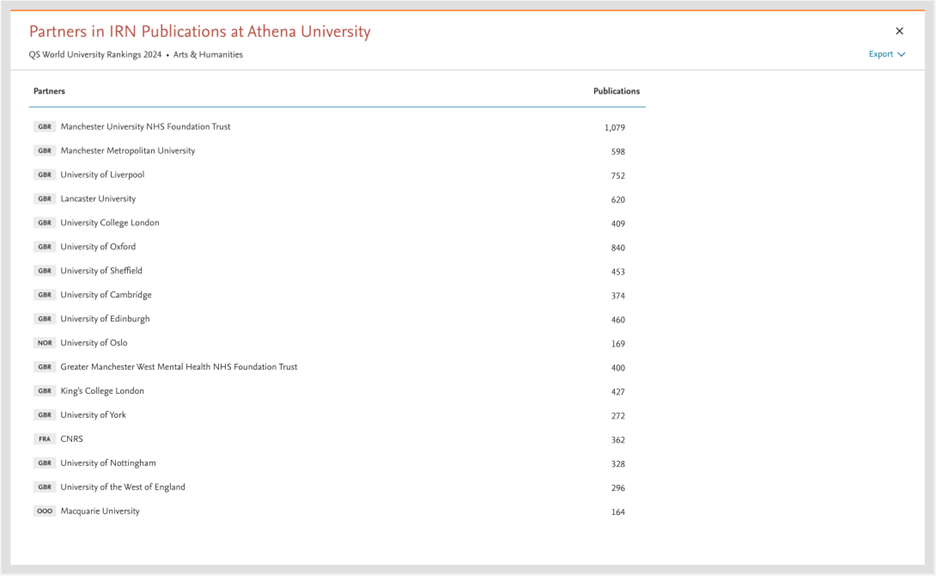
- Partners:
The list of partners and corresponding country codes are provided by QS and displayed with no changes.
- Sustainability (QS): 5%
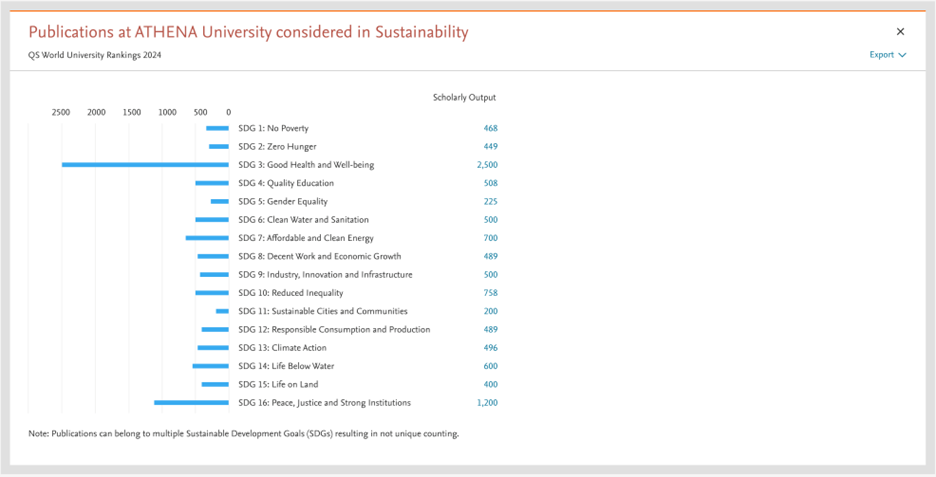
As part of the QS World University Rankings 2024 edition, the Sustainability performance lens was included in the methodology and makes 5% of the final score.
- On clicking “View list of publication by SDGs”
Did we answer your question?
Related answers
Recently viewed answers
Functionality disabled due to your cookie preferences