
View by category
 Back to all metrics
The product of the final indicator, which is calculated by dividing the Normalized Total Citation Count and by the number of Faculty of reported by the university.
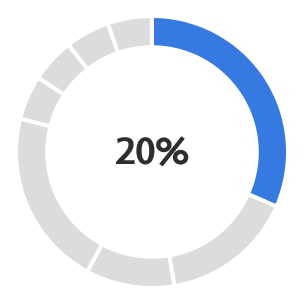
It makes 20% of the QS World University Rankings score.
Summary of calculation steps
Scholarly Output
Gross Scholarly Output
Scopus® Scholarly Output of the previous five years of the ranking year.
Affiliation definition exclusion
Exclude certain affiliations such as UK Trusts and oversea hospitals.
Scopus ASJC Subject adjustments
If a journal is classified solely under Scopus ASJC Multidisciplinary Subject area (code 1000), then such papers don’t feed into any of five faculty areas (which is not about paper exclusions, but rather ASJC to QS subject mapping). Still such papers counted in various overall counts.
Document-type exclusion
Exclude some types of documents from the considered Scholarly Output.
Apply Institution Cap per QS faculty/subject area
Exclude Scholarly Outputs with more than a certain number of unique affiliations listed on a publication. This is variable per QS faculty area, while ensuring that not more than 0.1% of an institutions Scholarly Outputs in a faculty area are excluded.
Scholarly Output (QS)
Scholarly Output used by QS, following exclusions and adjustments to derive the Total Citations Count.
Citation Count
Gross Citations Count
Total citations received by the Scholarly Outputs considered by QS.
Apply Self-Citations exclusion
Exclude Self-Citations at the author level.
Citations Count (QS)
Resulting Citation Count used by QS to calculate the NTCC.
Sum of Citations per Faculty Area
Sum of Citation Counts considered per each QS faculty area.
Normalized Total Citation Count (NTCC - QS)
Citation Count normalized by faculty area and adjusted to location (country). Normalized Citation Count used in the final calculation.
Citations per faculty
The ratio between the Normalized Total Citation Count and the Full-Time Academic Faculty.
Did we answer your question?
Related answers
Recently viewed answers
Functionality disabled due to your cookie preferences