
View by category
What is a system-processed request?
Last updated on January 15, 2026
In EOAP, system-processed requests are processed automatically by Elsevier on behalf of authors, to expedite the open access publishing process in fully open access journals.
Once their article is accepted, authors have 14 days to complete the “author journey”: the Rights & Access publishing options. Under this new process, if this deadline is missed, Elsevier progresses eligible articles to EOAP using the data provided by the author during article submission.
As these requests reach EOAP, authors are simultaneously presented with a new invite to select their open access license and copyright information in a condensed Rights & Access form.
Visually, we label each system-processed request in both the list and the detail view:

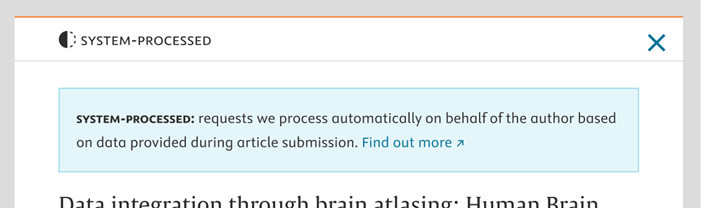
In terms of data, the only difference between the 2 types of request is the user license governing the article.
If the request has been system-processed, then the user license we display is a system assigned license, since the author has not selected their own. This system assigned license is derived from the journal’s default license. We show it using a pill, as seen in the image below.
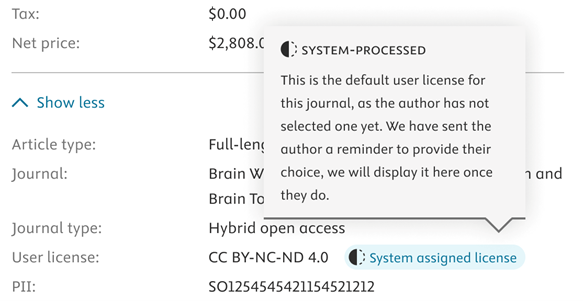
If and when authors select their choice, the pill is removed, and we replace the system assigned license with the author’s choice of license (it may be the same).
You can manage a system-processed request in the usual way, by approving or rejecting it as normal, within the established 21 days.
If the author selects their final choice of license after you do this, the request will be updated automatically, in whichever status it’s in (approved / rejected).
In the reports generated from the Requests tab, we now include a column which identifies the requests that are system-processed, for easy reporting.
Did we answer your question?
Recently viewed answers
Functionality disabled due to your cookie preferences